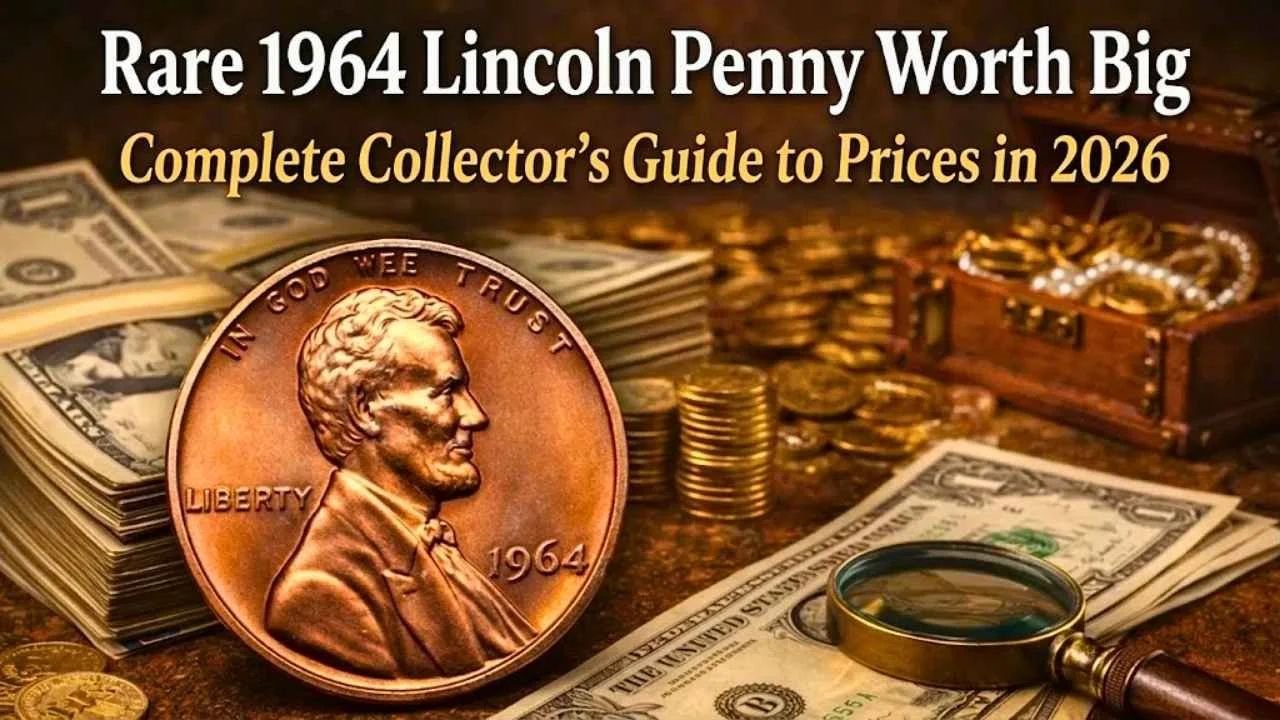
The 1964 Lincoln Penny is often overlooked due to its massive mintage, yet it holds surprising potential for collectors in 2026. While billions of these coins were produced, select examples—particularly those with rare errors, exceptional condition, or unique characteristics—have emerged as valuable finds in the modern numismatic market.
For collectors seeking hidden opportunities in everyday coinage, the 1964 penny represents a compelling blend of accessibility and untapped value.
Historical Context and Design Legacy
The Lincoln Cent has remained a staple of American currency since its introduction in 1909. Designed by Victor David Brenner, it was the first U.S. coin to feature a real historical figure—Abraham Lincoln.
By 1964, the coin had already transitioned from its original wheat reverse to the Lincoln Memorial design introduced in 1959. The obverse retained Lincoln’s iconic profile, while the reverse displayed the Lincoln Memorial, symbolizing national unity and legacy.
Minted primarily in copper, the 1964 penny reflects an era before major changes in coin composition, making it especially appealing to collectors who value traditional materials and craftsmanship.
Why the 1964 Penny Still Matters
At first glance, the 1964 Lincoln Penny may seem too common to hold significant value. However, its importance lies in the details. High production volumes increase the likelihood of minting anomalies, and over time, these small imperfections have become prized rarities.
Collectors today are particularly interested in coins that combine:
- Exceptional preservation
- Rare minting errors
- Distinctive visual appeal
In a market increasingly focused on condition and uniqueness, even a widely circulated coin like the 1964 penny can become a standout piece.
Rare Varieties and Error Coins
Doubled Die Obverse
One of the most sought-after varieties is the doubled die obverse. This occurs when the coin’s design is struck more than once at slightly different angles, creating a visible doubling effect on the date or lettering.
These coins are relatively rare and can command prices ranging from tens to hundreds of dollars, depending on clarity and condition.
Proof Coins and Deep Cameo Examples
Proof coins from 1964 were struck with special care, resulting in sharper details and mirror-like surfaces. Among these, deep cameo examples—featuring strong contrast between frosted designs and reflective backgrounds—are especially valuable.
High-grade proof coins can sell for significant premiums, particularly when certified by professional grading services.
Off-Center Strikes
Off-center errors occur when the coin blank is misaligned during striking. The more dramatic the misalignment, the more desirable the coin becomes.
Collectors are drawn to these visually striking pieces, with values increasing based on the percentage of the design that is off-center.
Clipped Planchets
A clipped planchet results from a mistake during the cutting process, leaving a portion of the coin missing. These errors are relatively uncommon and are valued for their distinctive appearance.
1964 Penny Value by Condition
The value of a 1964 Lincoln Penny varies widely depending on its grade and rarity.
Circulated Coins
Most circulated examples are worth face value or slightly above. These coins typically show wear and lack the sharp details collectors seek.
Uncirculated Coins
Coins that have never entered circulation can range from $5 to $20 or more. Higher-grade examples with strong luster and minimal imperfections are more desirable.
Proof Coins
Standard proof coins generally sell between $10 and $30. However, deep cameo proofs in top condition can exceed $100, especially when professionally graded.
Error Coins
Error coins present the greatest potential for value. Depending on the rarity and visual impact, these coins can range from $50 to several hundred dollars—or more in exceptional cases.
Market Trends and Auction Insights in 2026
The market for mid-20th century coins has seen renewed interest in recent years. Collectors are increasingly turning their attention to overlooked issues from the 1960s, including the 1964 Lincoln Penny.
Auction data indicates strong demand for:
- High-grade uncirculated coins
- Deep cameo proof examples
- Clearly defined error varieties
As more collectors enter the hobby, competition for premium-quality coins continues to rise, pushing prices upward.
How to Identify a Valuable 1964 Penny
Spotting a valuable coin requires patience and attention to detail. Key factors to examine include:
- Date and mint mark: Look for subtle variations or inconsistencies
- Surface quality: Check for luster, scratches, and wear
- Design clarity: Strong details often indicate higher grades
- Unusual features: Doubling, misalignment, or clipping may signal rarity
Using a magnifying tool can help reveal fine details that are not visible to the naked eye. For potentially valuable coins, professional grading is strongly recommended.
Collecting Strategies for Modern Enthusiasts
The 1964 Lincoln Penny offers an accessible entry point into coin collecting while still providing opportunities for meaningful returns.
To build a strong collection:
- Focus on high-grade examples rather than large quantities
- Seek out certified coins for added security
- Store coins properly to preserve condition
- Stay updated on market trends and auction results
A disciplined approach can transform a simple hobby into a rewarding investment journey.
Cultural and Numismatic Significance
Beyond its monetary value, the 1964 Lincoln Penny represents a period of stability and tradition in American coinage. It reflects an era before major shifts in metal composition and design philosophy.
For many collectors, these coins carry a sense of nostalgia—reminders of a time when everyday currency was crafted with enduring artistic intent.
Owning such a coin is not just about value; it is about preserving a tangible piece of history.
Final Thoughts
The 1964 Lincoln Penny proves that even the most common coins can hold hidden potential. While the majority remain modest in value, rare varieties, error coins, and high-grade examples continue to attract serious attention in 2026.
For collectors willing to look closely and think strategically, this unassuming coin offers both opportunity and intrigue. Whether discovered in a collection or acquired through careful selection, the right 1964 penny can become a meaningful and valuable addition to any portfolio.