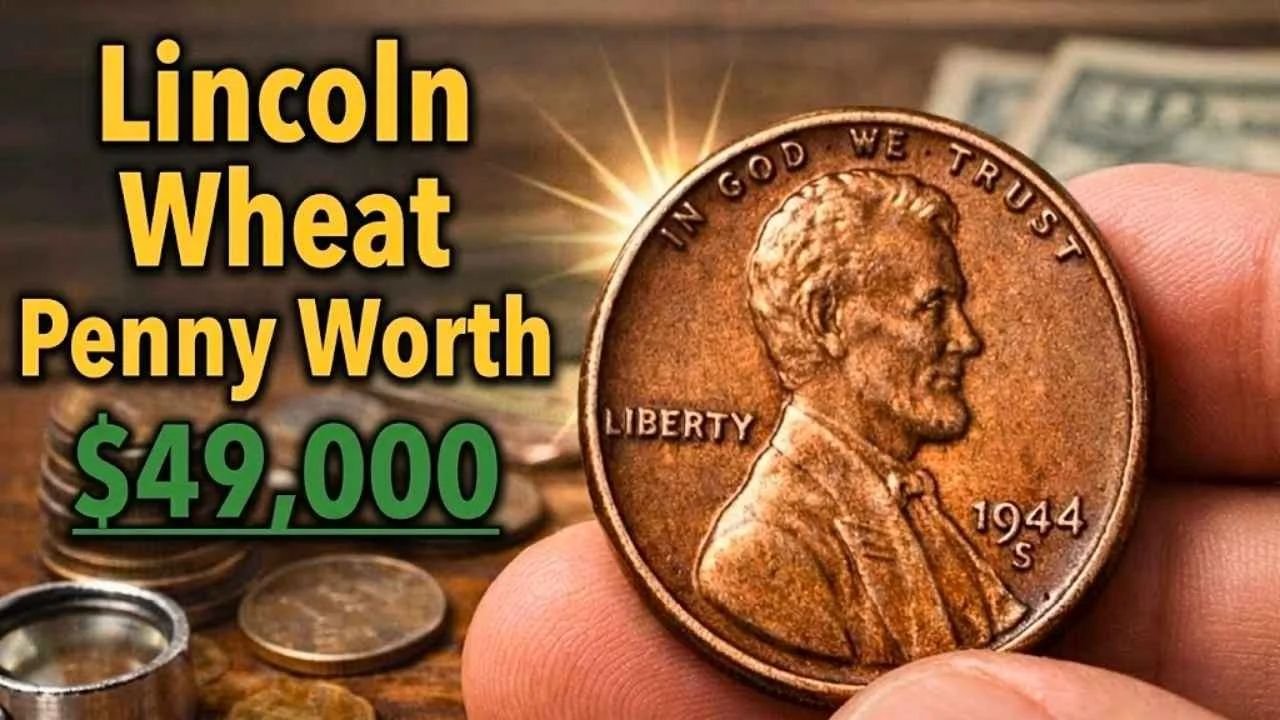
The Lincoln Wheat Penny remains one of the most recognizable and widely collected coins in American history. Introduced in 1909, it marked a turning point in U.S. coin design by featuring a real historical figure for the first time. More than a century later, this humble one-cent coin continues to capture the attention of collectors—especially as certain rare examples reach astonishing values.
In 2026, select Wheat Pennies have been valued as high as $49,000, raising an intriguing question: could such a valuable coin still be hiding in everyday circulation?
A Historic Beginning
The Lincoln Wheat Penny was created to honor the 100th anniversary of Abraham Lincoln’s birth. Designed by Victor David Brenner, the coin broke tradition by replacing symbolic imagery with a real person’s portrait.
The obverse features Lincoln’s profile, a design that remains on the U.S. penny today. The reverse, which gave the coin its popular name, displays two wheat stalks framing the denomination. This classic design was produced until 1958, after which it was replaced by the Lincoln Memorial reverse.
Today, Wheat Pennies are more than just currency—they are historical artifacts representing early 20th-century America.
What Determines a Wheat Penny’s Value
While millions of Wheat Pennies were minted, only a small percentage carry significant value. Several key factors determine whether a coin is worth a few cents or thousands of dollars.
Year and Mint Mark
Certain years and mint locations produced fewer coins, making them inherently rarer. Coins minted in Denver (D) or San Francisco (S) often carry added value depending on the year.
Rarity and Production Errors
Limited production runs and minting mistakes can dramatically increase a coin’s worth. Errors such as doubled dies, off-center strikes, or wrong metal compositions are especially prized.
Condition and Grade
Coins in uncirculated condition—those that show no signs of wear—are significantly more valuable. Professional grading services assign scores that help determine a coin’s market value.
Collector Demand
Ultimately, value is influenced by how much collectors are willing to pay. High demand for specific varieties can push prices well beyond expectations.
The $49,000 Wheat Penny Explained
Among the many varieties of Lincoln Wheat Pennies, a select few have reached remarkable price levels. In 2026, certain rare examples have been valued at up to $49,000, particularly those that combine scarcity with exceptional preservation.
These high-value coins often fall into one of the following categories:
- Rare date and mint mark combinations
- Exceptional uncirculated condition (MS-grade coins)
- Unique or dramatic minting errors
For example, coins with sharp details, original luster, and minimal imperfections are far more likely to achieve premium valuations.
Legendary Wheat Penny Rarities
Although the $49,000 valuation is impressive, some Wheat Pennies have achieved even greater fame.
The 1943 copper penny is perhaps the most well-known example. During World War II, pennies were made from steel to conserve copper. A small number of copper planchets were accidentally used, creating one of the rarest coins in U.S. history.
Other notable rarities include:
- 1909-S VDB penny (low mintage and designer initials)
- 1914-D penny (scarce and highly sought after)
- 1922 “No D” penny (missing mint mark error)
These coins highlight how small variations can lead to extraordinary value.
Could a Valuable Penny Still Be in Circulation?
The idea of discovering a $49,000 coin in everyday change is both exciting and realistic—though rare. Over the years, valuable coins have surfaced in unexpected places, including:
- Old coin jars and piggy banks
- Estate collections
- Circulated pocket change
While most rare coins have already been identified by collectors, overlooked pieces do occasionally reappear. This possibility keeps enthusiasts actively searching through their coins.
How to Identify a Rare Wheat Penny
For those hoping to uncover a valuable coin, attention to detail is essential. Start by examining the following:
- Date and mint mark: Look closely beneath the date for small letters indicating mint location
- Surface quality: Check for sharp details and minimal wear
- Unusual features: Watch for doubling, misalignment, or color differences
- Weight and metal composition: Some rare coins differ slightly in material
Using a magnifying glass or coin loupe can make a significant difference. For any potentially valuable find, professional authentication is strongly recommended.
Smart Collecting in 2026
The Wheat Penny market continues to attract both beginners and experienced collectors. Its accessibility makes it an ideal starting point, while its rarities offer serious investment potential.
A strategic approach includes:
- Building a date-and-mint set
- Focusing on high-grade coins
- Investing in certified examples
- Staying informed about auction trends
Collectors who prioritize quality and knowledge are more likely to build valuable and meaningful collections.
Cultural and Emotional Value
Beyond financial worth, the Lincoln Wheat Penny holds deep cultural significance. It represents an era of craftsmanship, historical storytelling, and national pride.
For many, these coins evoke nostalgia—memories of childhood collections, family traditions, and the simple act of saving spare change. Each coin carries a story, connecting the present to a rich historical past.
Final Thoughts
The Lincoln Wheat Penny proves that extraordinary value can exist in the smallest denominations. While most examples remain modest in price, rare varieties continue to command impressive figures, including valuations reaching $49,000 in 2026.
Whether you are a seasoned collector or simply curious, the search for rare Wheat Pennies offers both excitement and opportunity. Hidden among ordinary coins could be a piece of history waiting to be rediscovered—reminding us that even the simplest objects can hold remarkable worth.