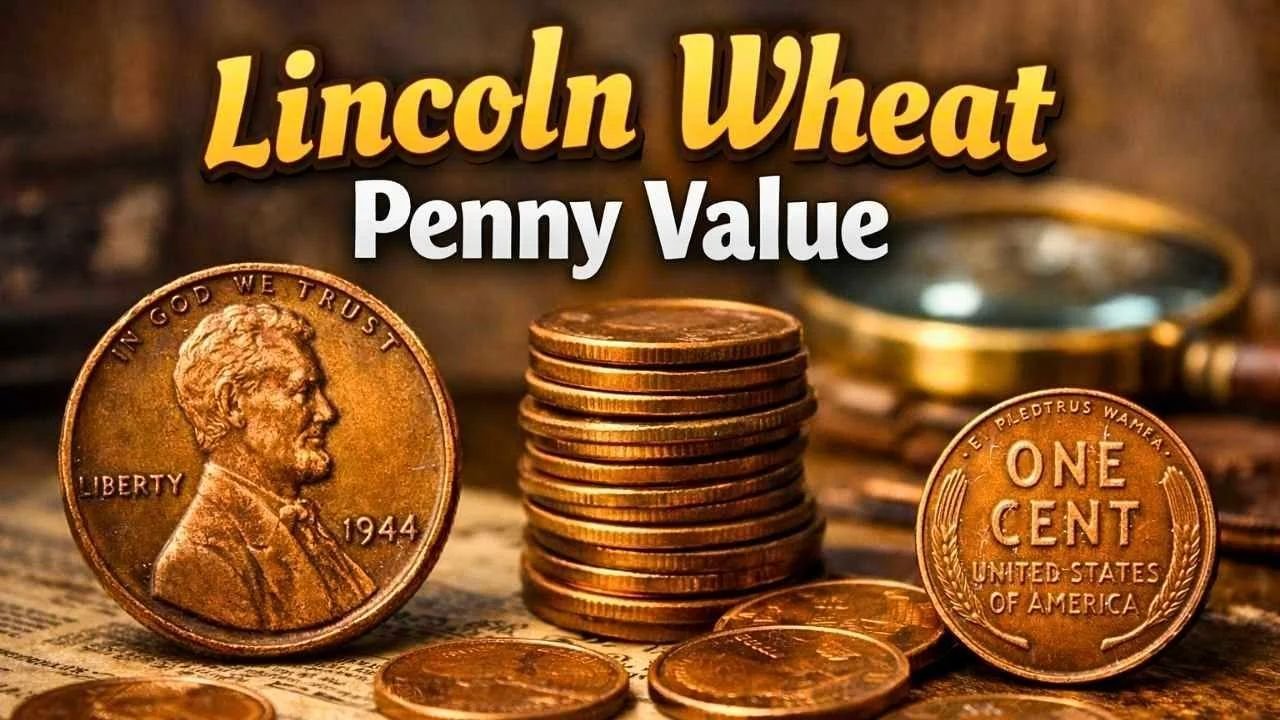
The Lincoln Wheat Penny remains one of the most celebrated and widely collected coins in American history. First introduced in 1909, it marked a turning point in U.S. coinage by featuring a real historical figure—Abraham Lincoln—on everyday currency.
More than a century later, the appeal of these coins has only grown stronger. While most Wheat Pennies remain modest in value, a select group of rare dates, mint errors, and pristine examples have reached extraordinary price levels. In 2026, some of these coins are worth hundreds of thousands of dollars, with one remarkable specimen selling for an astonishing $586,000.
The Origins of a Numismatic Icon
The Lincoln Wheat Penny was designed by Victor David Brenner to commemorate Lincoln’s 100th birthday. The obverse features a detailed portrait of the president, while the reverse displays two wheat stalks framing the denomination—symbolizing prosperity and growth.
Produced from 1909 to 1958, these coins circulated widely across the United States. Over time, however, certain issues became rare due to limited production, minting anomalies, or historical circumstances.
Today, these pennies are not just collectibles—they are tangible pieces of American heritage.
What Drives Wheat Penny Value
The value of a Lincoln Wheat Penny is determined by several critical factors. Understanding these elements is essential for identifying high-value coins.
Rarity and Mintage
Coins with lower production numbers are naturally more scarce. Early issues from San Francisco and Denver are particularly desirable.
Minting Errors
Mistakes during production—such as doubled dies or incorrect metal compositions—can significantly increase a coin’s value.
Condition and Grade
Coins in mint state condition, with sharp details and original luster, command the highest prices. Professional grading adds credibility and enhances market appeal.
Collector Demand
Some coins achieve legendary status, driving intense demand and pushing prices to exceptional levels.
The Most Valuable Lincoln Wheat Pennies
1909-S VDB Penny
The 1909-S VDB Lincoln Penny is one of the most famous coins in American numismatics. With a mintage of just 484,000 and the designer’s initials prominently displayed, it is highly sought after.
Top-condition examples can reach tens of thousands of dollars, making it a cornerstone of any serious collection.
1914-D Lincoln Penny
The 1914-D Lincoln Penny is another key date. Its relatively low mintage and scarcity in high grades make it one of the most valuable regular-issue Wheat Pennies.
Well-preserved examples often sell for thousands, with premium specimens commanding even higher prices.
1922 No D Penny
In 1922, all pennies were minted in Denver, yet some coins were produced without the “D” mintmark. The 1922 No D Lincoln Penny is a fascinating error that has become one of the rarest varieties in the series.
High-grade examples can exceed $20,000, depending on condition.
1931-S Lincoln Penny
With a mintage of just 866,000, the 1931-S Lincoln Penny is one of the lowest-production coins of the era. It remains highly collectible, especially in uncirculated condition.
1943 Copper Penny
The 1943 Copper Lincoln Penny is arguably the most famous error coin in U.S. history. During World War II, pennies were supposed to be made from steel to conserve copper. However, a few copper planchets were mistakenly used.
Only a handful of these coins exist, and one example sold for $586,000. This coin represents the pinnacle of Wheat Penny collecting.
1944 Steel Penny
In contrast to the 1943 copper error, the 1944 Steel Lincoln Penny resulted from leftover steel planchets being used after the Mint returned to copper.
These rare coins can fetch tens of thousands of dollars, depending on condition.
Additional Key Dates to Watch
Several other Wheat Pennies have gained recognition for their scarcity and value potential:
- 1926-S Lincoln Penny
- 1911-S Lincoln Penny
- 1912-S Lincoln Penny
- 1915-S Lincoln Penny
- 1920-S Lincoln Penny
- 1924-D Lincoln Penny
While not as famous as the top-tier rarities, these coins are still highly desirable, particularly in high-grade condition.
The Power of Error Coins
Error coins add an extra layer of intrigue to Wheat Penny collecting. Among the most notable are:
1917 Doubled Die Obverse
Visible doubling in the lettering makes this coin stand out. High-grade examples can be worth thousands.
1936 Doubled Die Obverse
This variety features noticeable doubling and remains a favorite among collectors seeking dramatic errors.
1955 Doubled Die Obverse
The 1955 Doubled Die Lincoln Penny is one of the most iconic error coins ever produced. Its bold doubling is easily visible, making it both famous and highly valuable.
Market Trends in 2026
The market for Lincoln Wheat Pennies continues to thrive in 2026. Growing interest in tangible assets and historical collectibles has driven demand for rare coins.
Auction results show strong performance for:
- High-grade uncirculated coins
- Rare error varieties
- Key dates with low mintage
As more collectors enter the market, competition for premium coins is intensifying, pushing prices higher.
How to Identify Valuable Wheat Pennies
Collectors looking to uncover hidden value should carefully examine their coins.
Key steps include:
- Checking the date and mint mark
- Inspecting for doubling or unusual features
- Evaluating surface condition and luster
- Using magnification for detailed inspection
For potentially valuable coins, professional grading is essential to confirm authenticity and maximize value.
Final Thoughts
The Lincoln Wheat Penny proves that even the smallest denomination can hold extraordinary worth. From the legendary 1943 copper penny to rare key dates and striking error coins, these pieces continue to captivate collectors worldwide.
In 2026, their value extends far beyond face value—offering both financial opportunity and a deep connection to history. Whether discovered in an old collection or acquired through careful selection, each rare Wheat Penny carries the potential to be a remarkable find.